- 20
- 3
- 2
- 5
- 7
- 1
- 3
- 1
- 1
- 1
- 5
- 5
Lake Nakuru National Park (188 km2, 73 mi2) was created in 1961 around Lake Nakuru, near Nakuru Town. It is best known for its thousands, sometimes millions of flamingos
- Jan
- Feb
- Mar
- Apr
- May
- Jun
- Jul
- Aug
- Sep
- Oct
- Nov
- Dec
Lake Nakuru National Park
Location Rift valley
Coordinates 0°22′S 36°05′E
Lake type alkaline lake
Primary outflows Lake Nakuru has no outflow
Surface area 45 km2
Surface elevation 1,754 m
Resting squarely on the floor of the Great Rift Valley and surrounded by the characteristic woody and bushy grassland, her sky mirrored lake waters extending to an expansive mass of semi-alkaline water, Lake Nakuru National Park is a ball of beautiful sights waiting to be explored. A wide ecological diversity, varied wildlife habitats, plant and animal species await the wild outdoor lovers.
The park is a uniquely rewarding game-viewing destination and a successful sanctuary for both the endangered black rhinos and white rhinos.
Despite its small size, the Lake Nakuru National Park impresses with its huge variety of fauna and flora. The alkaline lake, with its salt solution, creates the best habitat for blue-green algae and minute crabs, called crustaceae. This algae and crabs are the main food source for the lesser flamingos. Approximately 30 percent of the world’s beautiful flamingo population reside at Lake Nakuru. The blue-green algae give the flamingos their typical pink feathers. Keep your camera ready as you might just catch thousands of these birds spreading their wings and suddenly taking flight – an experience not to be missed. The number of flamingos at any given time vary according to the water level and salt concentration of the lake.
In addition to the 450 different bird species, the Lake Nakuru National Park also offers protection to the endangered Rothschild’s giraffe and the two African rhinoceros species: the black and the white rhino. Between the 1970s and 1990s, the number of rhinos found in Kenya had decreased drastically due to poaching. In order to contribute to the preservation of the species, a breeding programme with 19 animals was started in Lake Nakuru National Park. The population numbers for rhinos have recovered and steadily increased over the years. Today, individual animals are regularly relocated to different regions in Kenya.
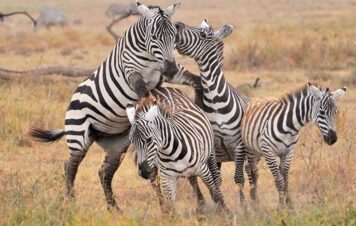
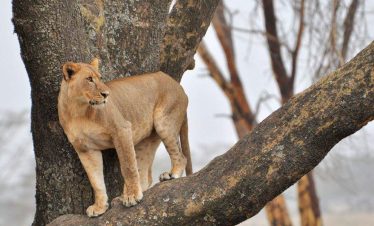
The Lake Nakuru National Park is also home to large buffalo herds, waterbucks, hippos and a wide variety of gazelle species. The “yellow” fever acacia forest on the riverbank, together with the taller trees, offers shade and the ideal hunting ground for leopards. The lions make their home and prefer to hunt in the short grass savannah in the northern Lake Nakuru National Park. Apart from elephants, you can see almost all the well-known animals of East Africa in this 188 square kilometre park.
Lake Nakuru National Park (188 km2, 73 mi2) was created in 1961 around Lake Nakuru, near Nakuru Town. It is best known for its thousands, sometimes millions of flamingos