Kenya is home to more than forty ethnic communities, each with its own language, traditions, governance systems, dress, cuisine, and spiritual beliefs. The landscapes carry ancestry, identity, and centuries of cultural heritage.
A cultural safari reveals the human stories that live within these landscapes. Every village visit, shared meal, traditional dance, and conversation becomes an opportunity to understand the communities that have shaped Kenya’s identity for generations.
Through thoughtfully guided experiences by Arch Treks and Safaris, travellers get to discover that Kenya is a place where culture, history, and daily life are deeply intertwined.
Walking Into Living Culture: The Heart of the Maasai
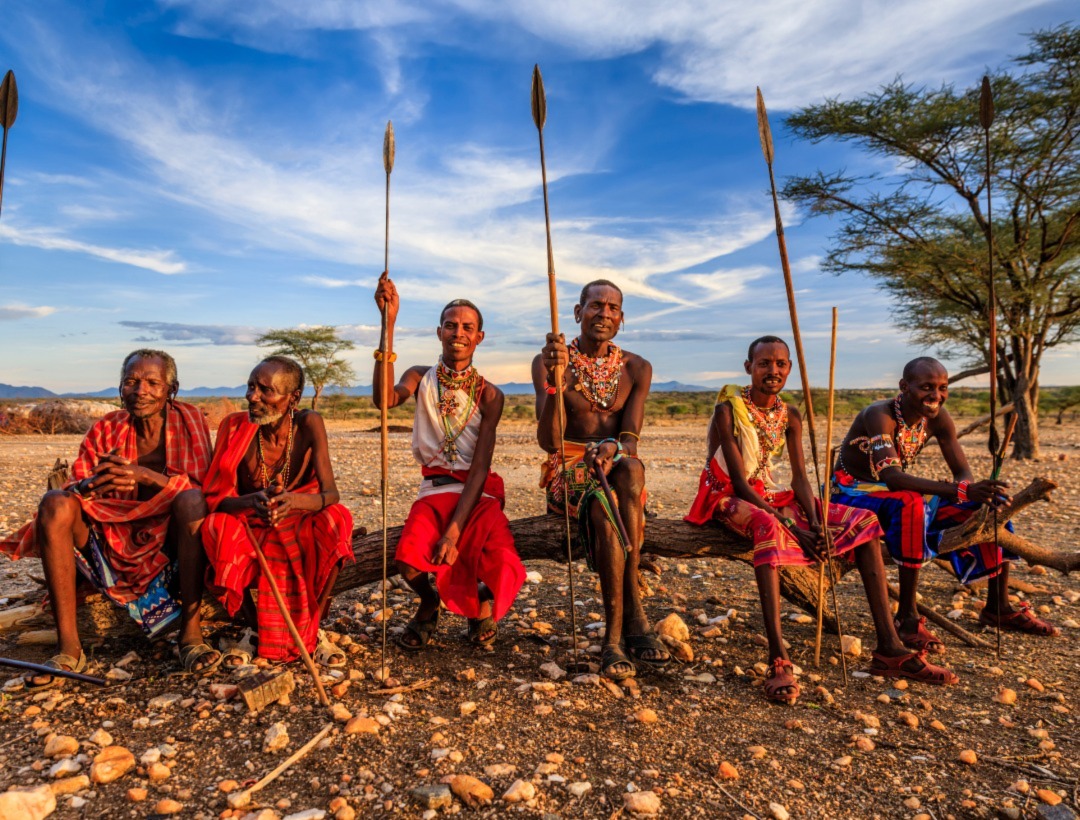
For many travellers, their first cultural encounter in Kenya is with the Maasai, one of the country’s most recognized pastoral communities.
Beyond the striking red shukas and intricate beadwork lies a well-structured society built around age-sets, warrior traditions, elder leadership, and deep pastoral knowledge. Cattle represent wealth, survival, and identity within Maasai culture, while community decisions are guided by councils of elders.
When travelers visit a Maasai village, they are welcomed warmly into a living community rather than a staged performance. Visitors may witness the famous Adumu, the traditional jumping dance where young warriors demonstrate strength, rhythm, and unity.
However, the most meaningful experiences often happen quietly:
- Sitting inside a manyatta, the traditional homestead built by Maasai women
- Listening to elders speak about land preservation
- Learning how bead colors symbolize age, marital status, and identity
In these moments, the Maasai elders share stories of resilience, adaptation, and cultural pride in this modern world.
Kenya’s Cultural Mosaic: A Nation of Many Communities
Kenya’s cultural story stretches far beyond one community. The country’s ethnic diversity reflects centuries of migration, trade, and adaptation across landscapes ranging from mountains and forests to lakes and deserts. These communities can broadly be grouped by shared cultural heritage and ways of life.
Pastoral Communities of the Savannah
Several communities in Kenya belong to the Nilotic cultural group, traditionally known for nomadic or semi-nomadic pastoralism. These include Maasai, Samburu, Turkana, Teso, Ilchamus (Njemps) and Elmolo.
Livestock plays a central role in their identity and livelihood. Cattle, goats, and camels are not only sources of food but also symbols of wealth and social connection.
Their culture is rich with ceremonial dances, storytelling traditions, and intricate beadwork. Many of these communities have lived alongside wildlife for generations, developing knowledge about animal behavior, seasonal movement, and environmental balance.
Agricultural Communities of the Highlands
The largest cultural group in Kenya belongs to the Bantu-speaking communities, who historically settled in fertile regions suited for agriculture. Major communities include Kikuyu, Luhya, Kamba, Meru, Kisii and The Mijikenda of the coastal hinterlands
Farming traditions are deeply rooted here, with crops such as maize, beans, bananas, and vegetables forming the backbone of rural life.
Traditional dishes reflect this agricultural heritage. Meals like githeri (maize and beans), mukimo (mashed potatoes with greens), and ugali served with vegetables or meat are common staples across many households.
Markets, storytelling gatherings, music, and community celebrations play an important role in social life.
Lake Communities and Fishing Traditions
Around Lake Victoria, communities such as the Luo developed cultures closely tied to the lake’s resources. Fishing, water transport, and lakeside agriculture define everyday life. Fresh fish, particularly tilapia, forms a key part of local cuisine, often served with ugali and traditional vegetables.
Music and storytelling traditions are also strong here, reflecting a vibrant cultural identity shaped by life along Africa’s largest lake.
Northern Desert Communities
In Kenya’s northern and northeastern regions, communities such as the, Rendille, Borana, Gabra, and Orma have adapted to life in arid landscapes. These Cushitic communities practice pastoralism centered around camels and cattle, animals uniquely suited to survive harsh desert climates.
Their traditions emphasize resilience, mobility, and deep knowledge of water sources, weather patterns, and grazing lands, skills refined over centuries of living in challenging environments.
Swahili Culture Along the Coast
Along Kenya’s Indian Ocean coast lies one of East Africa’s most historically layered cultures, the Swahili culture. Shaped by centuries of trade across the Indian Ocean, Swahili culture blends African, Arab, and Persian influences. Historic towns such as Mombasa and Lamu reflect this heritage through coral-stone architecture, intricately carved wooden doors, and narrow winding streets.
Swahili cuisine is one of the most distinctive in East Africa, known for its fragrant spices and coconut flavors. Popular dishes include
- Pilau – aromatic spiced rice
- Biryani layered with rich seasoning
- Viazi karai – fried potatoes coated in spiced batter
- Coconut-based seafood curries
Culture and Conservation: A Shared Story
A cultural safari offers something deeper than sightseeing. It allows travellers to understand the communities that shape Kenya’s identity.
They may have opportunities to:
- Learn beadwork techniques from Maasai women
- Visit vibrant local markets filled with spices and handmade crafts
- Observe basket weaving and wood carving
- Engage with farmers about planting seasons
- Share tea while listening to family histories
Through shared meals, conversations with elders, traditional crafts, and village visits, travellers begin to see Kenya as a nation rich in heritage, resilience, and cultural diversity.
Why Choose a Cultural Safari?
A cultural safari allows travellers to truly understand communities that shape kenya’s identity:
- Discover how communities live in their landscapes
- Learn about traditions that shape daily life across Kenya
- Experience authentic cultural practices
- Support local communities through responsible travel and cultural exchange
Arch Treks and Safaris ensures that every cultural encounter is approached with authenticity, and respect, allowing travellers to experience Kenya’s people and Culture in meaningful and memorable ways.